Lease-Up Marketing: A 12-Month Plan for New Developments
Every empty unit in a new building costs money every day it sits there. Lease-up is the stretch between opening the doors and hitting stabilization, and the marketing you do before that stretch decides how long it lasts.
This is a lease-up marketing plan for developers, operators and their sales and marketing teams, whether the project is purpose-built rental, mixed-use or commercial. It runs on a 12-month clock and it's built around one hard problem: persuading people to commit to a place they can't walk around yet.
What lease-up means, and when it ends
Lease-up starts when a new building begins signing leases and ends when it reaches stabilized occupancy. Lease-up specialist Resident360 describes a property as stabilized "once 90% to 95% of the total units are occupied" by paying residents (Resident360).
Your lenders care about that date. So do your investors. Every month you shave off it is income you'd otherwise never see.
The 12-month lease-up marketing timeline
12 months out: name, brand and first images
Resident360 recommends starting branding and naming "at least 12 months before your estimated completion date" (Resident360). This is when you lock the project name, the identity and the first renders.
Brief your renders for marketing. A planning render and a marketing render ask for different things. Resident360 suggests starting with three: one exterior, one suite interior and one amenity space, which typically takes 4 to 6 weeks. Ask for day and dusk versions of the exterior. You'll use both.
9 months out: a place to send people
Build a holding page with a waitlist form. Keep it simple: a strong image, one line on what the place is, and a reason to register now, like early access, a preview event or first pick of suites.
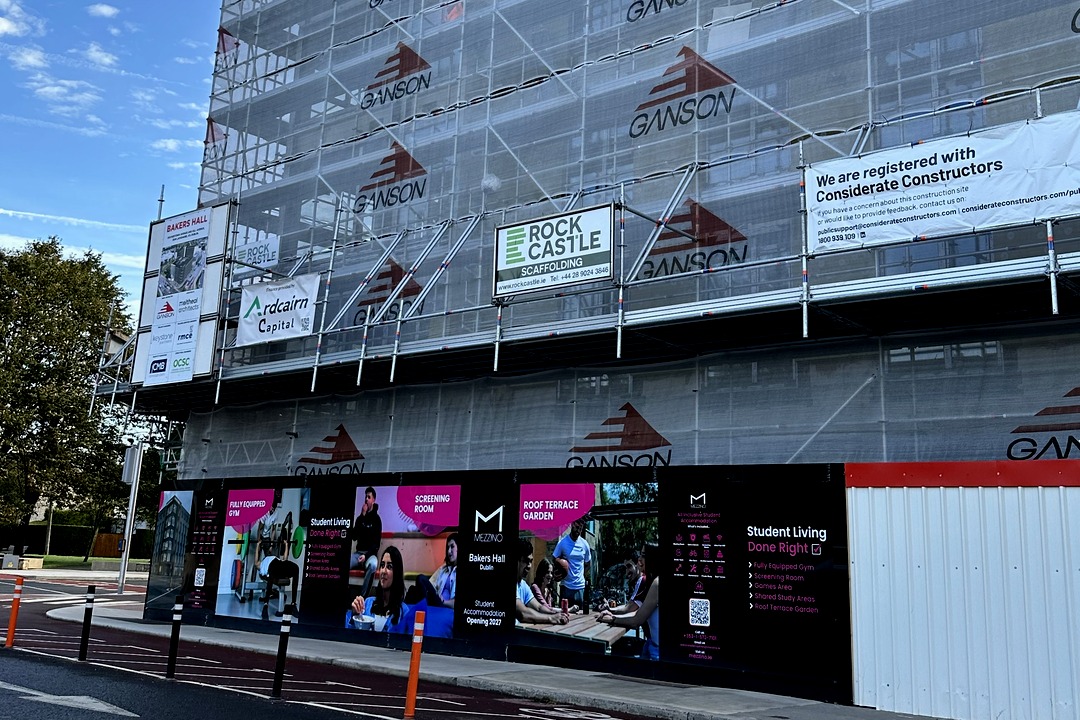
Wrap the construction hoarding at the same time. Put the project name and the web address on it in letters you can read from a passing streetcar.
6 months out: film, before anyone can visit
This is the gap most lease-ups fall into. The building isn't finished, the model suites aren't ready, and the only thing prospects can see is a still image.
Stills show a layout. Film shows a life. A 30 to 60 second film of the place with people in it, morning light in the kitchen, the terrace busy at dusk, does what a floor plan can't. It lets someone picture their Tuesday there.
You don't need to wait for the building to make one. We direct Launch Films from the renders your visualization studio has already made, so you can have film on the holding page, in paid social and in the leasing team's inbox months before opening.
3 months out: paid media and the leasing office
Resident360 recommends launching targeted digital ads "90 days before your physical leasing office opens" (Resident360). That's your cue to cut the film into every format your channels need: 9:16 for Reels and Stories, 4:5 for feeds, 16:9 for the website and YouTube. Our guide to video formats and cutdown lengths covers the specs.
Give the leasing team the same film to send in follow-up emails. A prospect who registered six months ago needs a reason to come back.
Opening: swap renders for the real thing
Once the building is finished and photographed, switch to it. Buyers and renters trust real photography more than any render, and you should use it the moment you have it.
From that photography we can make a Hero Film with the same cast who appeared in the launch film. Same people, same place, now finished. That continuity is hard to get any other way, and it makes the campaign feel like one story.
Stabilization: keep the feed moving
The last 10% of suites are often the slowest. Fresh content helps: a summer version of the amenity film, a short cut about the neighbourhood, a feature on the co-working floor. Campaign Films give you new cuts from the same footage, so each new post comes from footage you already own.
What prospects need to see before they commit
- The arrival: entrance, lobby, the first 30 seconds of coming home
- A suite in daylight, with scale they can understand
- The amenities in use, with people in them
- The neighbourhood: transit, coffee, green space
- The view, at the time of day it looks best
Everything on that list can be shown before completion if your renders cover it. Brief your visualization studio with this list in hand.
Keep it honest
Lease-up content has to match the building people walk into. Don't add amenities that won't exist, and don't move windows to improve a view. If you use AI anywhere in the process, label it. We label every frame we make under the EU AI Act, and we'd advise anyone else to do the same. More on that in our note on ethical virtual staging.
Frequently asked questions
When should lease-up marketing start?
Branding and naming should start around 12 months before completion, and targeted digital ads around 90 days before the leasing office opens (Resident360).
What counts as a stabilized building?
A property is typically considered stabilized when 90% to 95% of suites are occupied by paying residents (Resident360).
Can we make lease-up video before the building is finished?
Yes. We make film from your renders and CGI before completion, then continue with the same cast from real photography once the building is done.
Planning a lease-up? Send us a render. We'll show you what prospects will see.