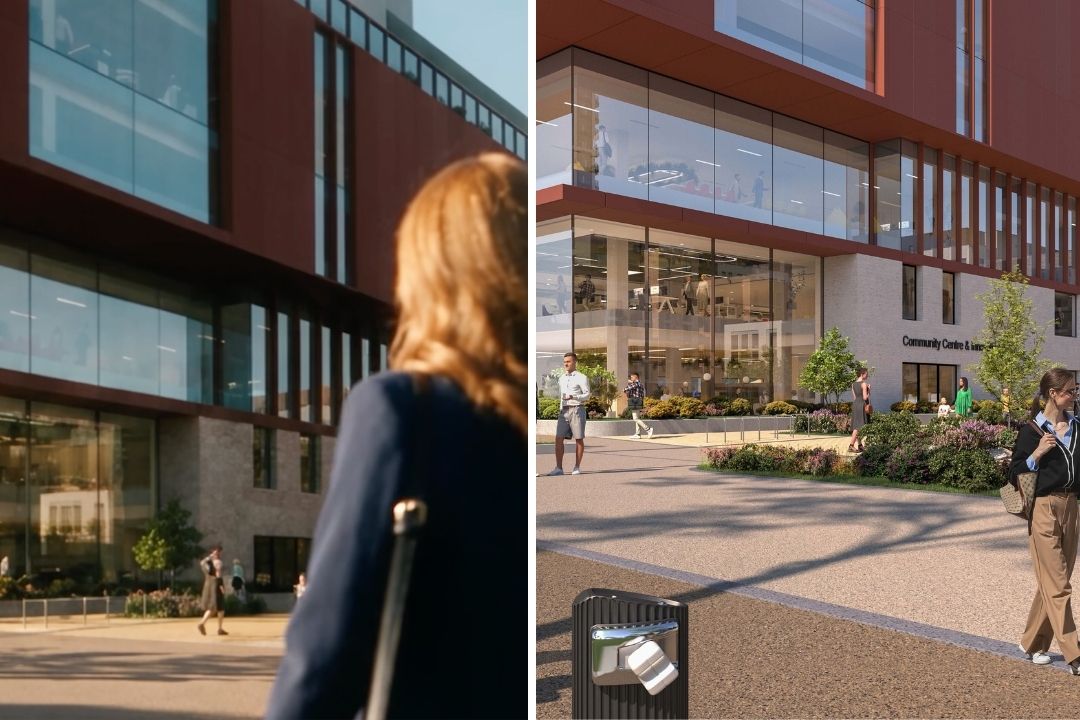
Commercial Space Photo to Video Tours: How to Create Office Promo Films Without Filming (2026)

Commercial space doesn't sell square metres. It sells confidence.
Location.
Quality.
Flow.
The sense that a team could walk in on Monday morning and actually thrive there. That's what a leasing film needs to communicate, and it's a harder brief than most people expect.
The traditional answer has been a full production shoot: access coordination, a crew, lighting rigs, half a day on-site, and then weeks of edit. For a mid-size office floor or a business park, that process costs more than the brief is usually worth.
In 2026, there's a faster route. And it produces the same result.
What photo-to-video actually means
A commercial promo film built from photography isn't a slideshow. It's a structured, edited video with rhythm, pacing, music, and a narrative flow, built entirely from your existing photo set.
At ListLift, that means taking the images you already have (exterior, lobby, floorplate, amenities, surrounding area) and turning them into a guided viewing experience. One that follows the same logic a prospective tenant or broker uses when they evaluate a space.
We can also layer in location context: transit access, nearby amenities, district landmarks. Not to invent value that isn't there, but to make sure the full picture is visible.
The structure that works for commercial leasing
The reason most commercial property videos fall flat isn't production quality. It's structure. They show the space without answering the questions a tenant is actually asking.
Here's the framework we use, built around how tenants and brokers genuinely evaluate a building:
Locate (0–5 seconds)Establish the address and the confidence. Exterior hero shot, district name, access context. Answer the question: where is this, and is it credible?
Enter (5–12 seconds)Arrival experience. Entrance, lobby, security, lifts, reception. This is where first impressions form and where a lot of commercial videos waste time on the wrong things.
Work (12–30 seconds)The product itself. Floorplate, open-plan areas, private offices, natural light, flexibility. This is the longest section because it's the one that actually closes leases.
Support (30–42 seconds)The amenities that reduce friction. Meeting rooms, kitchens, breakout areas, showers, bike storage, loading access. These matter more than people think, especially for competitive leasing.
Connect (42–52 seconds)Neighbourhood value. Transit, parking, cafés, gyms, hotels. Quick "minutes to" context. A tenant signing a five-year lease is also signing up for everything around the building.
Close (52–60 seconds)Return to the exterior hero shot and a single, clear call to action. Enquire. Schedule a viewing. Download the brochure.
Once this 60-second structure is built, the same content adapts cleanly into shorter social cuts (a 15-second ad for LinkedIn, a 30-second version for email) without rebuilding anything from scratch.
What you need to bring
A strong commercial promo film can be built from 25 to 60 photos. More isn't better. What matters is coverage across the right categories.
The building and access (10–15 photos)Two or three exterior angles. Entrance. Lobby and reception. Lifts, corridors, and wayfinding. Parking or loading if it's relevant to the brief.
The space itself (10–25 photos)Wide floorplate shots to establish scale. Open-plan areas. Private offices and meeting rooms. Kitchen and breakout. Views and daylight. Anything that demonstrates flexibility: demountable walls, raised floors, ceiling grid.
Shared amenities (5–15 photos)Conference facilities, shared lounge, business centre, on-site café if there is one, showers, lockers, bike storage, terrace. These are often undersold in leasing materials and oversold in brochures. Photography keeps it honest.
Around the building (5–12 photos)Metro or train access, bus routes, district context, nearby cafés and restaurants, gyms, hotels, parking. Not stock photography: actual images of the immediate area.
One thing worth saying directly: for commercial, clarity beats quantity. Ten well-lit floorplate shots are worth more than thirty near-identical ones taken in different light.
Choosing the right tone
Commercial property covers a wide range of buildings and audiences. A serviced office targeting early-stage startups needs a different feel from a Grade A corporate tower targeting financial services firms.
Before we start, we ask you to pick one direction:
Corporate Premium: clean, confident, minimal text overlays, strong architectural cues. For large floorplates, established business districts, and institutional landlords.
Creative Studio: light, openness, flexibility, lifestyle amenities front and centre. For creative industries, tech companies, co-working adjacent.
Serviced and Flexible: community, meeting rooms, plug-and-play ease, short-term commitment. For operators and landlords competing on flexibility.
Industrial and Logistics: access, loading, clear height, circulation efficiency. For distribution, warehousing, last-mile. Less atmosphere, more specification.
Getting this right upfront saves time in the edit and produces a video that actually speaks to the right tenant.
Where this performs best
A 60-second commercial promo film built this way works across every channel where leasing decisions get made:
Brokerage listing pages and landlord websites. Email outreach to tenant representatives. Investor decks and leasing brochures. Screens in lobbies and reception areas during fit-out.
The format question (16:9 for web, 9:16 for social, 4:5 for LinkedIn feed) is the same as any other property video. We cover that in detail in our guide to property marketing video formats →.
What we don't do
Commercial leasing is high-stakes. Misrepresenting a space (ceiling heights, layout, views, condition) creates problems that outlast the lease.
Our standard is straightforward: we elevate the presentation of what's actually there. We don't alter floorplate dimensions, window positions, or structural features. We don't add amenities that don't exist. If anything is visually enhanced, it stays consistent with the reality a tenant will walk into.
This isn't just an ethical position. It's practical. Tenants and brokers have seen enough property marketing to notice when something doesn't add up, and nothing ends a leasing conversation faster.
If you have a commercial property to lease and a photo set to work from, get in touch → and we'll tell you within 24 hours what's possible.