Hotel Photo-to-Video Tours: How to Create Premium Promotional Films Without Filming (2026)
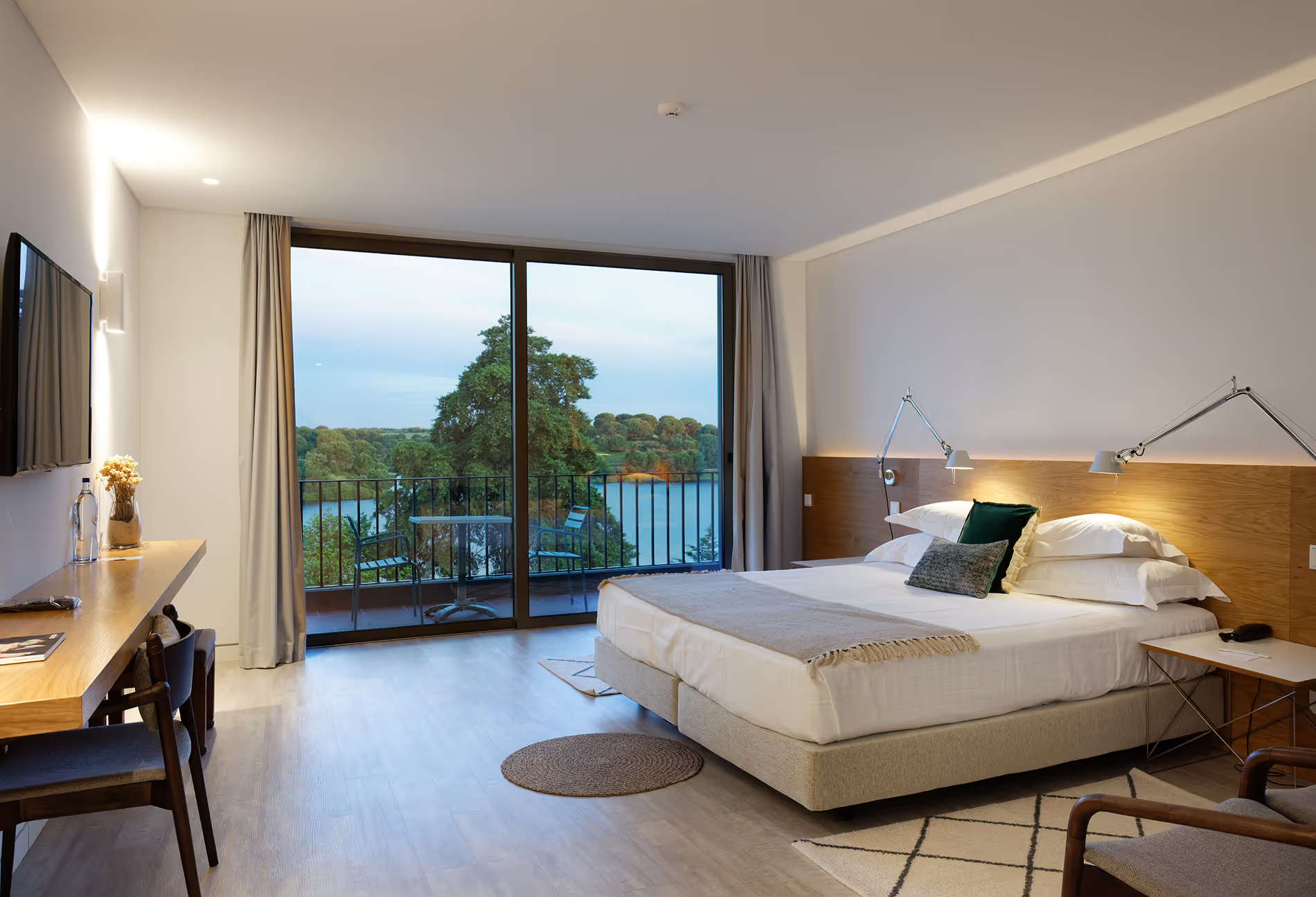
Hotels don't sell rooms. They sell the decision to go.
The couple choosing between three boutique hotels in the Alentejo isn't comparing thread counts or minibar contents. They're asking a simpler question: which one looks like the trip I want to have? The corporate travel buyer selecting a conference venue isn't reading room specifications first. They're watching the video and deciding whether it feels right for their people.
Every hotel already knows this. The challenge is that producing the video to answer that question (the one that runs on the homepage, gets sent to event planners, and performs on Instagram) requires a production shoot. Access restrictions. Guest disruption. A weather window that cooperates. A production company whose schedule and yours somehow align.
In 2026, that's rarely the fastest or the most practical route.
What your photo archive can do
Most hotels have a photo set that was produced for the website and forgotten about everywhere else. Room types at their best. The lobby on a quiet morning. The pool at the time of day when it actually looks like the pool. The restaurant laid up for dinner. Local highlights from the surrounding area.
That archive is the starting point for a promotional film that can run on your homepage, in email campaigns to travel trade partners, on OTA listings, and across every social channel where guests first encounter your property.
At ListLift, photo-to-video for hotels is a human-led process: AI production tools used by professional editors to create movement, pacing, and atmosphere from still imagery. The result is a film that feels like a hotel you'd book, not a template that every property on the platform could have used.
The narrative arc that converts browsers into bookings
Most hotel promotional videos fail for the same reason most venue videos fail: they show the property without telling a story. Beautiful rooms, the pool, the restaurant, in whatever order they happened to be photographed, with music underneath and a logo at the end.
A guest choosing a hotel is following a specific emotional journey. The video needs to follow it with them.
Arrive (0–5 seconds)Set the tone immediately. Exterior hero, entrance, first impression. The opening five seconds answer one question: is this the kind of place I want to be? The answer needs to be yes before anything else happens.
Stay (5–25 seconds)Sell the room. This is the core product and the section most hotel videos either rush or treat as an afterthought. Light, materials, the view from the bed, the bathroom. The details that appear in every guest review because they're what people actually remember. Take the time here that the section deserves.
Explore (25–45 seconds)Sell the destination. For most hotels, this is the section with the most untapped potential. Guests don't choose a hotel just for the room. They choose it because of where it puts them. Beach, old town, trails, vineyards, marina, golf, markets. The film should make someone feel the pull of the place, not just the property.
Return (45–60 seconds)Bring it home. Pool, spa, a cocktail at sunset, breakfast the next morning. End on the feeling that closes the booking: I don't want to leave. Logo and CTA. Direct booking link or "Explore rooms."
This arc (arrive, stay, explore, return) mirrors how guests actually choose. It works for boutique hotels and for large resorts. It works for leisure travel and for corporate stays, with different emphasis in each section.
What to provide
A strong hotel promotional film can be built from 25 to 50 photos. The mix that produces the best results:
Hotel essentials (20–35 photos)Two or three exterior angles, taken at different times of day if possible. Lobby and reception. Your best room types, two to four photos per category, not just the hero shot, but the detail that makes the room. Bathroom hero and at least one close detail. The view or balcony if it sells. Pool, spa, and gym. Restaurant, bar, and breakfast service. And the signature details: the lighting design, the texture of the materials, the moment that makes your property visually distinct.
The surrounding area (8–20 photos)This is where many hotel photo sets have a gap, and it's the gap that costs the most in terms of what the film can do. Beach or waterfront. The town or landmarks nearby. Whatever experience the location makes possible: golf, surf, hiking, cycling, wine country, markets. Seasonal highlights if you have them.
If you don't have destination photography yet, there's a practical workaround: simple chapter cards ("5 minutes to the beach," "Old Town nearby," "Golf close by") that hold the section's place while you build the archive over time. It's not the strongest version of the film, but it's an honest one, and it can be updated as the photo set grows.
Choosing the tone before you start
A hotel film that tries to be everything ends up being nothing. The pacing, music, transitions, and emphasis that work for a design-forward luxury property are wrong for a family resort. Choosing the tone before the edit begins is what makes the finished film feel intentional.
Luxury calm: slow pace, long transitions, minimal text overlays, design and materiality front and centre. For properties where the space itself is the statement.
Boutique story: warmer, more personal, local culture and craft woven through. For independent hotels where character and distinctiveness are the sell.
Family escape: space, pool, breakfast, ease. The explore section emphasises activities over atmosphere. For properties where the guest's primary question is "will we have enough to do?"
Adventure base: the explore section becomes the hero. The hotel is the comfortable return point after the experience. For properties in hiking, cycling, surf, or outdoor destinations.
Business and events: meeting rooms, reliability, location efficiency, and service. For conference hotels and properties targeting corporate travel buyers.
Tell us which direction and we shape pacing, transitions, and emphasis accordingly. The photo set does the work. The edit gives it a point of view.
Where this film performs best
A 60-second master hotel promotional film covers almost every channel where a booking decision gets made:
The homepage hero section, either as a muted background loop or a featured video with sound. Room category pages where a version can be cut to feature that specific room type. YouTube and Vimeo for embeds and sharing. Email campaigns to travel trade partners, event planners, and corporate travel managers. And social: the 15-second and 30-second cutdowns that work on Instagram, TikTok, and YouTube Shorts.
One brief. One set of photography. Every format your marketing needs for the next 12 months.
The standard we hold ourselves to
In hospitality, a gap between expectation and reality isn't just a complaint. It's a review. The guest who arrives expecting the pool shown in the film and finds it under renovation doesn't just leave disappointed. They write about it.
Our rule is the same one we apply to all our work: we elevate the presentation of what's actually there. We don't add amenities that don't exist, alter views, or show renovations as current reality when they're only planned. If lifestyle elements (people in the spaces) are used, they're subtle, appropriate, and disclosed clearly.
For hotel marketing, the disclosure is a single line:Promotional film created from hotel photography with optional digital enhancements for presentation.
It's not a caveat. It's professionalism.
If you have a hotel and a photo set, get in touch →. We'll tell you within 24 hours what we can build from what you have, and where a few targeted additions to the archive would make the biggest difference.