What to Do With Your Renders After Planning
Planning's done. The renders did their job. A committee checked them against the site and said yes. Now they're sitting in a shared folder, and you've got a scheme to sell.
Most of the property sales and marketing teams we talk to are in the same spot. They didn't commission those images. The architects and visualisers made them for a planning officer, and the brief was accuracy, compliance, and investment teams. Sales needs to offer something else entirely: a reason to care.
So here's what planning renders are built for, why they often fall flat at launch (or don't quite measure up), and five ways to get more from the property CGI you've already paid for.
Planning renders were made for a different reader
In the UK and Ireland, the visuals that go in with a planning application usually follow the Landscape Institute's Technical Guidance Note 06/19. It sorts them into four types. The top one, Type 4, has to "represent the highest level of accuracy and verifiability". A planner needs to trust what they're looking at.
The same note puts those in a separate box from illustrative images "intended for marketing", which don't have to stick to fixed viewpoints. The guidance itself treats them as two different jobs. One proves a building fits its site. The other makes somebody want to be there.
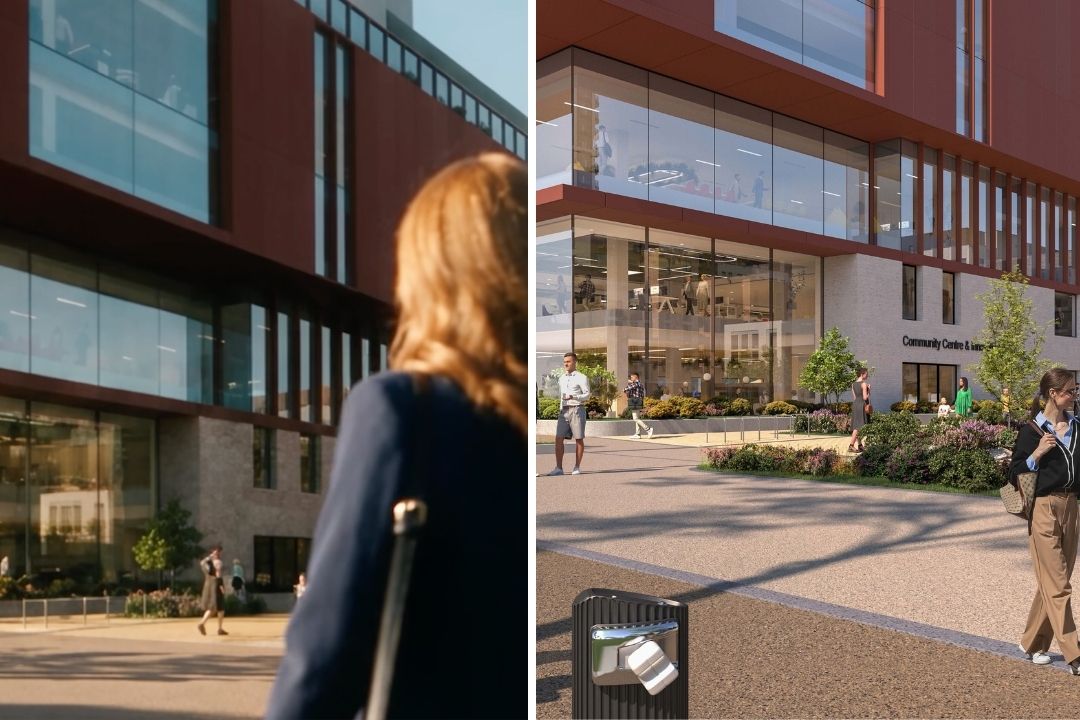
That's why so many launch brochures open on a wide shot from a fixed point across the road, at midday, with three small figures in the middle distance. It's honest. It also tells a buyer, tenant, or investor very little about what it feels like to arrive, work, live, or trade there.
Why the gap shows up at launch
You're the one judged on the launch, and the files you inherited were built to get through a committee.
Meanwhile, the people you're selling to are used to watching before they decide. Wyzowl's 2026 video marketing survey found that 85% of people say a video has convinced them to buy a product or service, and 63% say a short video is how they'd most like to learn about one. On the marketing side, 93% of video marketers told Wyzowl that video helped people understand what they were selling.
A still render asks people to imagine the life in a building. A film shows them.
Five things to do with your renders after planning
1. Gather everything you own
Pull it all into one place: planning CGIs, design-stage renders, game-engine exports, drone stills, interior views, even the options that got dropped. Teams usually find they own far more than they thought. Flag the views that show arrival, amenity, interiors, and the streets around the site. Those are the moments people ask about.
2. Re-sort them around moments
Planning sets are filed by viewpoint. A sales story runs on moments: stepping off the tram, first coffee on the terrace, the lobby at five in the evening. Re-sort your renders that way and the gaps show up fast.
3. Put people back in
Planning renders keep people small and neutral on purpose. For sales, human presence carries the whole thing. Who lives here, works here, eats here? Answer that before anything gets made, because a cast makes a building look used.
4. Turn the strongest set into film
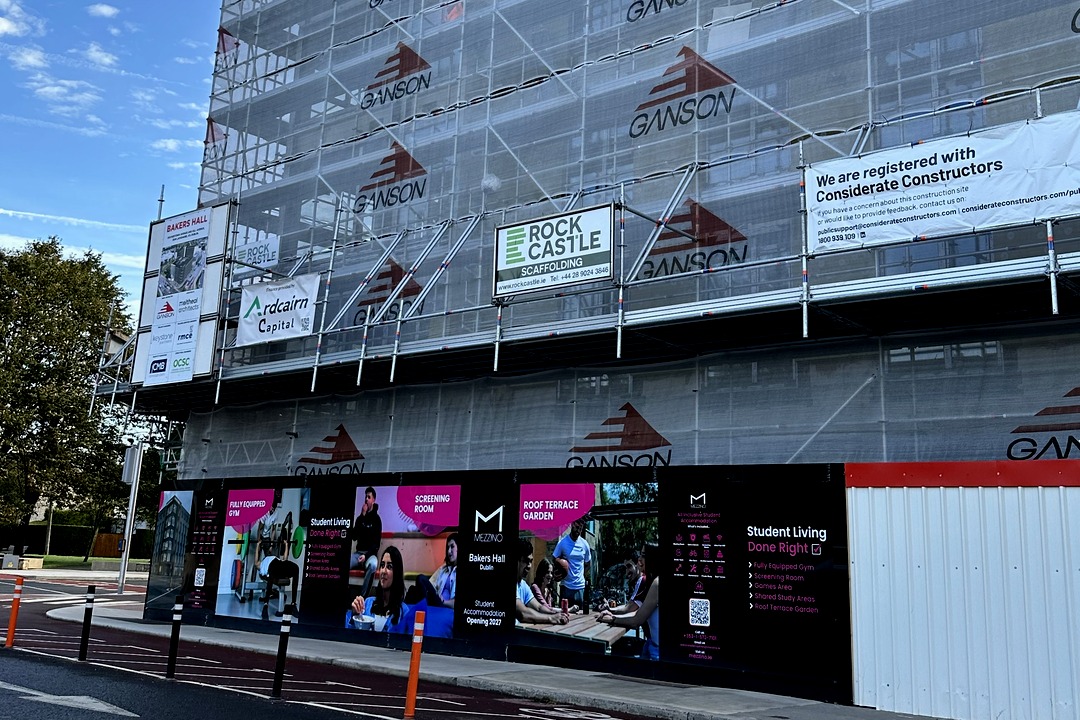
This is where render to video earns its keep. We take the CGI, renders, and stills you already have and direct them into a Launch Film, with real people, real light, and a score. Nobody shoots anything and nobody needs a permit. It works at any stage: before ground's broken, mid-build while the site's still behind hoarding, or next to photography once it's finished. If you've got photography of a completed building, a Hero Film does the same from photos.
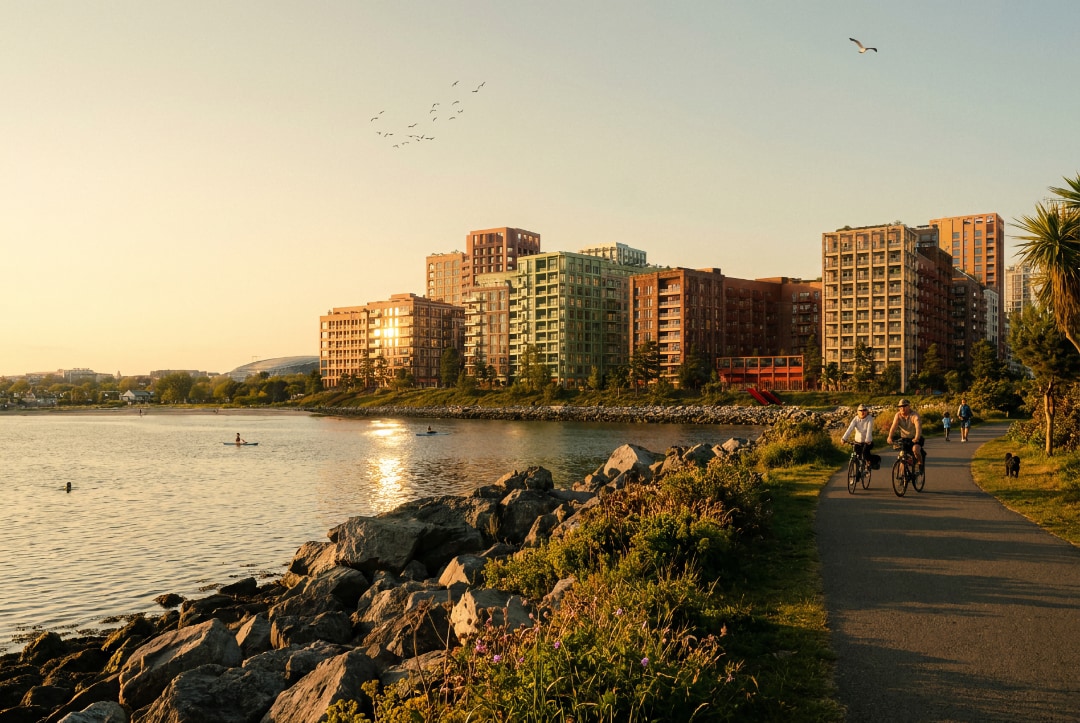
Our Glass Bottle film in Dublin started this way. CGI, renders, and show photography became a lifestyle film before the homes existed.
5. Cut it for every channel
One master film should feed the website, the marketing suite screen, LinkedIn, investor decks, and paid social. Campaign Films are the cutdowns: vertical, square, and short versions from the same footage, so every channel tells the same story. Our guide to video formats and cutdown lengths covers which length suits which feed.
What about a fly-through?
Some teams go back to their visualisation studio and ask for an animation. That's a reasonable route, and we've compared the two in CGI animation vs ListLift. In short, a fly-through moves a camera through the model. A living film adds the people and light that make a place feel lived in. If you're still picking a studio for new visuals, our 10 questions for developers will help.
Keep the cast for the next phase
Schemes change. Phase two opens, the amenity floor gets redesigned, the lease-up push starts. We keep your cast and setting on file, so the next film carries on with the same people in the same place. If the design changes, we rebuild what moved and leave the rest alone. That's handy for a lease-up plan that runs for twelve months.
FAQ
Can planning renders be used for marketing?
Yes, as long as your contract with the architect or visualiser gives you the rights, so check that first. They're accurate but rarely persuasive on their own, so most teams add people, light, and movement before using them in a launch.
How do you turn property CGI into video?
Send your renders, CGI, or game-engine stills to a studio that works from existing imagery. We direct them into film with a cast, real light, and a score, and a filmmaker checks every frame before you see it. No shoot needed.
Do I have to wait until the building is finished?
No. A Launch Film works from renders at any stage: before construction, mid-build, or after completion. Once you've got photography, a Hero Film can work from that instead.
Send us your renders
You've already paid for the hard part. Send us a render. We'll show you what your buyers, tenants, and investors will see.